Interest Rates Dropped: Here’s What That Mean for Northwest Arkansas Real Estate

The Fed just announced a rate cut, and suddenly, the housing market chatter is louder than Razorback fans after Sam Pittman’s unceremonious canning. Buyers are asking if now’s the time to pounce, recent homeowners are calling about refinancing, and everyone wants to know if another cut is on the way. Let’s break it down in plain English—without the economic jargon or the need for a finance degree.

What the Interest Rate Drop Means for Buyers in Northwest Arkansas

Lower Rates = More Buying Power

When interest rates dip, your monthly payment shrinks. That house in Bentonville or Rogers that felt like a financial stretch last month? Now it might actually fit your budget without causing heart palpitations. Lower rates don’t mean homes are on sale, but they do mean you can get more house for the same payment.

Translation: if you were on the fence, this rate cut is like a polite nudge from the housing gods saying, “Hey, maybe get off Zillow at midnight and actually go look at a house.”

How Much More Home Can You Afford in 2025?

A small percentage drop in rates can mean tens of thousands more in buying power. For example, a $300,000 home at last year’s rate might cost you the same each month as a $325,000 home today. That bump could mean the difference between a standard kitchen and the one with the quartz countertops you’ve been drooling over.

Why It’s Still Smart to Focus on Your Budget (Not Just Rates)

That said, don’t let “lower rates” convince you to throw your budget out the window. The right home is about fit, not just what the bank says you can technically afford. Rates help, but a house still needs to fit your lifestyle (and your grocery bill).


Should Recent Homebuyers in NWA Refinance After the Rate Cut?

Why Lenders Already Anticipated the Cut

The second the Fed sneezes, lenders have already stocked up on tissues. In other words, they usually see rate cuts coming and price them into the mortgages you locked in. That means most people who closed recently already got the benefit baked in.

When Refinancing Actually Makes Sense

Refinancing can be smart if rates drop significantly from where you locked, or if you’re planning to stay in your home long enough to recoup the closing costs. But if your rate is already competitive, chasing a tiny drop won’t save enough to justify the hassle.

The Cost of Refinancing vs. the Potential Savings

Think of refinancing like switching cell phone plans. Sure, you might save $10 a month, but if it costs $3,000 in fees and paperwork to get there, is it really worth it? Unless you see a major rate shift, the answer is probably no.


Is Another Interest Rate Cut Coming in 2025?

What Economists Are Predicting

Some experts believe another cut is possible later this year if the economy cooperates. But just like trying to predict Arkansas weather—sunny morning, tornado afternoon, snow by dinner—it’s not an exact science.

Why Timing the Market Rarely Works

Waiting for the “perfect” rate is like waiting for the perfect time to have kids, start a business, or clean out the garage. It never really arrives. If buying now makes sense for your budget and your life, don’t stall just because you’re hoping for another quarter-point drop.

The Best Approach for Buyers and Homeowners in Northwest Arkansas

The real key is flexibility. The Fed could cut again if the economy plays nice, but for now, don’t plan your whole financial future around it. If you’re ready to buy, the best time is when it makes sense for your budget, not when you’ve memorized Jerome Powell’s facial expressions on CNBC.


Bottom Line for the NWA Housing Market

What Buyers Should Do Now

If you’ve been house-hunting in Fayetteville, Bentonville, or Bella Vista, this is a great window to make your move. You’ll get more bang for your buck thanks to lower rates, but don’t let excitement push you past your comfort zone.

Why Homeowners Can Relax (For Now)

If you bought recently, congratulations, awesome! You likely already have a solid rate. Unless we see another big drop, refinancing probably isn’t worth the time, cost, and paperwork. Translation: Enjoy your new home without refinancing FOMO.

Stay Flexible, Stay Informed, and Stay Local

Could rates drop again in 2025? Sure. But don’t build your whole housing strategy on a “maybe.” The smarter move is to focus on what works for your family and your budget now. The market will do what the market does. Your job is to make sure your real estate decisions fit your life here in Northwest Arkansas.


Ready to talk through your options? Whether you’re buying your first home, upgrading, or just curious about refinancing, I’ll help you translate “Fed speak” into real-world advice (with fewer acronyms and more coffee).
Mortgage Rate Drama in Northwest Arkansas: Could September Be the Plot Twist?

If you’ve lived in Northwest Arkansas for more than five minutes, you know two things: we take our Razorbacks football very seriously, and we have strong opinions about mortgage rates. Well, maybe not all of us, but anyone even wandering around the edges of real estate is definitely paying attention.

Currently, the 30-year fixed mortgage is camped out in the mid-6% range—around 6.5% to 6.6%. Not terrible, but not exactly the “let’s run out and buy a house and a bass boat” numbers we saw back when interest rates were low enough to make us giddy. For a lot of buyers, those mid-6’s feel like being invited to a backyard BBQ only to find out the burgers are veggie patties. Technically fine… but not what you were hoping for.

Why September Could Be a Big Deal

Here’s the tea (or should I say Onyx latte): the Federal Reserve is hinting that it might lower rates this September. Now, don’t start practicing your happy dance just yet—this isn’t a guaranteed return to the magical 3% mortgages of yesteryear. Those belong in the same archive as Blockbuster memberships and AOL email addresses.

But even a modest cut could have a real impact here in NWA. When rates dip, buyers tend to come out of Zillow scroll-mode and start actually touring homes again. Sellers see more foot traffic at open houses. And agents? Well, we get a small break from the endless “We’re just waiting until rates drop” conversations that make us consider switching careers to goat farming in Madison County.

What It Means for Buyers

If you’ve been eyeing that Bentonville townhome near the Greenway or a lake cottage in Bella Vista, a dip in rates could mean your monthly payment shrinks just enough to make it doable. It might also mean more competition—because when one buyer sees an opportunity, so do twenty others.

What It Means for Sellers

More buyers in the game = more showings, more offers, and potentially stronger selling prices. Translation: if your home has been sitting on the market feeling like the last kid picked for dodgeball, a Fed cut could suddenly make you the star quarterback.

What It Means for NWA Real Estate as a Whole

Let’s be honest: people are already moving here in droves. The job market is strong, the lifestyle is appealing, and Californians are still in shock at what $500K buys here compared to the West Coast. If rates budge even slightly downward, expect even more out-of-staters making offers on that Craftsman in Rogers or the new-build in Centerton.

The Bottom Line

Mortgage rates are like Dickson Street traffic: unpredictable, occasionally ridiculous, but impossible to ignore. September’s Fed meeting might just be the plot twist the Northwest Arkansas market has been waiting for.

So whether you’re buying, selling, or just nosy (hey, we all love a good Zillow scroll), keep your eyes on those rates. The housing market in NWA is already exciting. Throw in a Fed rate cut, and things could get downright dramatic.

I Flip (and Build) Houses for a Living, But Apparently Can’t Be Trusted with One of My Own

Can I just vent for a second? I’ve had three cups of coffee and can hear colors arguing over whose hue is superior. I’ve got to get this rant out before I have a caffeine-induced stroke.

Our family has been self-employed since 1999. We’ve specialized in real estate investing since 2006. That’s a long time. It’s been fabulous and freeing and all the things one can imagine…until the Hubs and I go to buy a house for, God forbid, ourselves!!

My husband can analyze cash flows, estimate ARVs, and negotiate offers like he’s in an HGTV showdown. We can build houses from the ground up, navigate the pitfalls of city permitting, and even help others build wealth through real estate—but mention that we want to buy a home for our own family, and suddenly, we become a financial wild card.

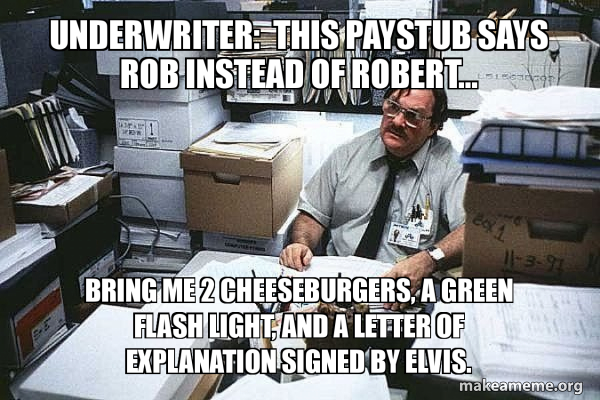
“Self-employed, you say?” the mortgage underwriter raises an eyebrow. “We’re going to need two years of tax returns, bank statements, letters of explanation, a signed affidavit from your third-grade math teacher, and maybe your blood type. Just to be safe.”

Meanwhile, our W-2 friends are getting preapproved faster than I can say “debt-to-income ratio,” all because they have a magical thing called a pay stub. Apparently, that tiny slip of paper holds more power than our 60-personal financial statement showing eight flips, five rentals, three new builds, and the fact that we haven’t missed a payment since Blockbuster was still a thing.

But wait! There’s more! The dreaded “write-off dilemma.” As any savvy investor knows, the key to not giving Uncle Sam half your soul is writing off everything legally possible. That cup of coffee during a contractor meeting? Write-off. The paint samples from Lowe’s? Write-off. The conference you attended in Vegas? Okay… maybe half of that.

But here’s the catch—those write-offs shrink your taxable income, and guess what the bank uses to qualify you for a mortgage? That’s right. Your taxable income. According to our tax returns, we make about $37.52 a year.

And then there are those glorious years when your tax return shows a juicy profit—enough to make your mortgage lender do a little happy dance in their ergonomic desk chair. But just as they’re about to approve you, they flip to last year’s return… and there it is: that big, beautiful loss. Suddenly, the mood shifts. You go from “promising borrower” to “riskier than a fixer-upper with a foundation issue.” Because if there’s one thing real estate is known for, it’s feast or famine—and mortgage lenders want to see two solid years of you feasting, not surviving on ramen and sheer willpower.

So now we’re sitting across from a loan officer, explaining that, yes, while we technically some years look like we “made nothing,” we actually always do make something. A lot of somethings. And I swear we can pay the mortgage. But unless I can time-travel and amend two years of tax returns, we’re out of luck.

You know what the real kicker is? After all the scrutiny, the lender graciously steers us toward their in-house loan—complete with a higher interest rate. Because nothing says “we trust your financial savvy” like penalizing you for excellent credit and nearly two decades of surviving the wild rollercoaster that is the real estate market. Meanwhile, someone flipping burgers at McDonald’s (no shade!) might qualify for a conventional loan with a lower rate, despite earning less and possibly quitting next Tuesday. But us? The seasoned investors? Try getting a personal mortgage and suddenly we’re treated like a financial liability armed with a Pinterest board and a dream.

In conclusion: real estate investing is glamorous—until you try to buy a house for yourself. Then you realize the system was built for people with jobs that come with watercoolers, not tool belts and spreadsheets.

But that’s okay. Because we self-employed real estate folks are used to creative solutions. If we can turn a condemned properties into a cash-flowing beauties, surely we can find a lender who understands the hustle.

Or at least one who doesn’t flinch when we say, “we’re self-employed.”

Confessions of a Real Estate Pro: Drop the Interest Rate, I’m Begging You

As a real estate professional, I’ve seen some things that would drive a weaker woman to whiskey. I’ve seen buyers cry in kitchens (and not just because of the backsplash). I’ve seen sellers list their homes for the price of a small country. I’ve written contracts at midnight, talked nervous first-timers off the ledge, and yes, I’ve survived the great toilet paper staging shortage of 2020. 

But lately? The greatest challenge isn’t picky buyers or appraisers whose sole mission in life is to kill agents’ deals. No, friends—it’s the interest rate. That little percentage is out here acting like it pays rent and has an opinion.

Real Talk: This Interest Rate Is Killing the Vibe

Let me paint you a picture. A couple falls in love with a home. Perfect location. Dream kitchen. Room for a dog and maybe even a baby. I run the numbers, and BAM—they realize their monthly payment is now the same as a luxury car lease… for two luxury cars. 

And one of them is on fire.

Cue the heartbreak. Cue the “maybe next year.” Cue me whispering sweet nothings to my lead tracker like, “It’s okay…they’ll be back…someday.”

Let me give you some more straight talk. This interest rate is also tanking the housing market. Maybe you think you already know why, but do you? Really?

Here’s Why We Need the Rate to Chill Out

1. Buyers Are Holding Back Like It’s a Junior High School Dance

Remember school dances? Everyone standing around awkwardly waiting for someone else to make a move? That’s the housing market right now. Buyers are hesitant, sellers are salty, and I’m just here holding my clipboard like a chaperone, wondering when the DJ will play something from the 80s.

A lower interest rate would be the Michael Jackson song that gets everybody on the dance floor.

2. Sellers Need Hope Too (and a Little Motivation)

Right now, many sellers are locked into 2-3% rates on their current homes and looking at the 7% market like, “Eh… we’re good.” I can’t blame them. But if rates dropped, we’d see more listings, more movement, and fewer homeowners treating their current mortgage like it’s a family heirloom.

Why is this important? I’m so glad you asked. 

  • Lower rates mean lower mortgage payments bringing buyers back into the market.
  • More buyers mean more demand and more movement in this stagnant housing market.
  • Sellers would start to sell again, bringing more inventory back into the market and balancing supply and demand.
  • Overall this creates a healthier market cycle.

Moving on….

3. I Would Like to Sell a House Without Explaining What a 2-1 Buydown Is

Every conversation starts the same way: “Well, the rate’s high, but have you heard of a 2-1 buydown?” By the end of the explanation, I feel like I’ve taught a semester of Econ 101 with none of the tenure. I’m not saying I mind educating people—but could we go back to a time when getting a mortgage didn’t require a spreadsheet, a prayer, and a nervous breakdown?

4. I Miss the Excitement

Remember 2020-2021, when rates were low and buyers were practically sprinting toward open houses like it was Black Friday at Best Buy? Was it chaotic? Yes! But it felt like one never-ending real estate party. Now it’s like the party ended, and someone turned on the fluorescent lights. We need a little spark again. I’m not saying we go back to 20-21.  For a variety of reasons. Neither Covid nor that housing market was exactly healthy. Pretty sure we all needed therapy after that season. But what about in the form of a 4.5% interest rate and a fresh batch of motivated buyers?

In Conclusion: Do It for the Deals, Jerome

So, if anyone from the Fed is reading this: I get it, inflation is a thing, the economy is complicated, and you’ve got a lot on your plate. Dear Lord, somebody give Trump a Benadryl. 

But please… think of the real estate professionals. Think of the buyers. Think of the lonely For Sale signs swaying in the wind like forgotten dreams.

Lower the rate. Reignite the market. And let me go back to writing offers that don’t require a personal essay, three co-signers, and a letter from the Pope.

With love (and a stack of business cards I can’t get rid of), Your Friendly Neighborhood Real Estate Pro