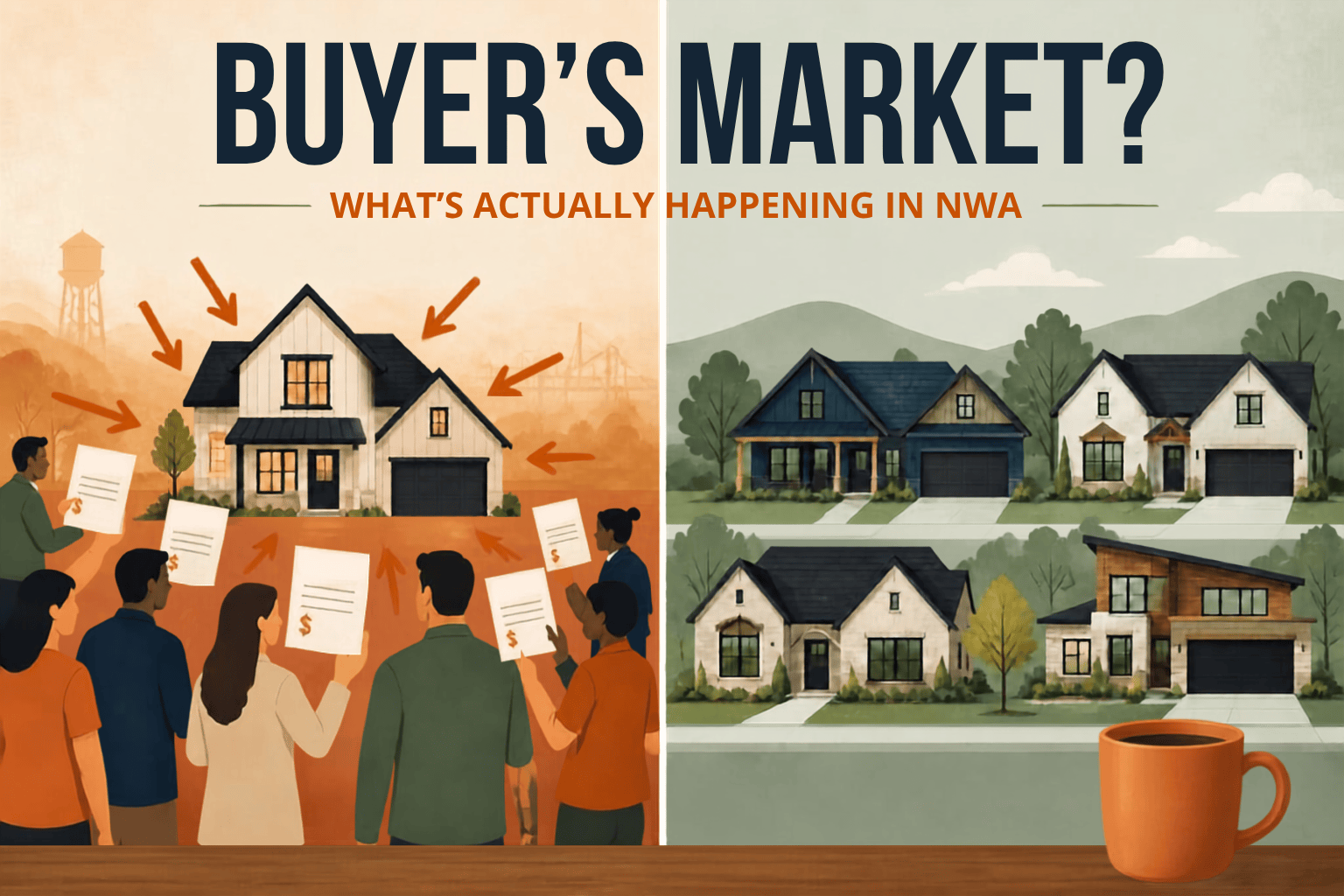
Wait… Is Northwest Arkansas Becoming a Buyer’s Market?

No. But Something Interesting Is Happening.

Holy Crap, Buyers Have Choices Again

Ask anyone who’s lived in NWA for more than five years, and they’ll tell you, <cue old man’s voice>, “I remember back in the day when you could buy a real nice house for under $200K.”

Truthfully, “back in the day” wasn’t all that long ago.

Home prices in Northwest Arkansas were already ramping up between 2015 and 2019, culminating in the absolute insanity that was the Great COVID Housing Event.

Several things came together in 2020 to make that possible. Most importantly, housing inventory was already extremely low, and falling fast.

In October 2020, Bentonville had only 117 homes listed for sale, compared with 507 in December 2018. That’s a roughly 77% decline in available listings in less than two years.

And it got worse.

By June 2021, there were only 607 homes listed across the entire Northwest Arkansas market.

With that little inventory, prices rose quickly. Multiple offers became commonplace. Buyers waived contingencies they probably shouldn’t have waived and made enormous financial decisions in approximately the amount of time it takes me to order coffee.

In other words, everyone lost their crap.

And for those of us who lived and worked through that market, it quietly reset our definition of “normal.”

So when a house takes 45 or 60 days to sell today, it feels like something must be terribly wrong.

Maybe nothing is wrong.

Maybe we’ve just forgotten what normal looks like.

Something has clearly changed in Northwest Arkansas real estate.

But does that actually mean we’ve entered a buyer’s market?


First, What the Heck Is a Buyer’s Market?

<puts on teacher’s hat>

As a general rule, when there are fewer than about four months of available housing inventory, supply is tight. This favors sellers. There aren’t five other houses down the street for a potential buyer to consider.

It also creates an emotional response in buyers: “What if no other houses come on the market?”

In this kind of market, many buyers are willing to be less picky just to get into a house.

Now, when inventory sits around five to six months, this creates a relatively balanced housing market. Enough homes are available to give buyers choices without creating an oversupply.

Finally, as inventory climbs beyond that range, the advantage begins to shift toward buyers. More options, more comparables, and buyers can afford to be pickier.

So what does that mean for us now?

Current NWA data show substantially more inventory than a year ago, with the broader market now in balanced-market territory.

Apparently we’ve lived in real estate chaos long enough that normal now feels suspicious.


So What’s Actually Happening in NWA?

Here’s what’s important to remember.

Inventory is up. This means buyers have substantially more choices than they did a year ago. They don’t have to convince themselves they can live with the shag carpeting or wallpaper because there might not be another house coming along.

Homes are taking longer to sell. August average days on market rose to about 55 days across Benton, Washington, and Madison counties. That’s a harder pill for people to swallow when we got used to homes flying off the market faster than a big-screen TV on Black Friday.

Prices aren’t collapsing. The regional median sale price was about $388,400 in August, essentially unchanged from July. So no, the housing market isn’t collapsing, despite what the housing-market-doomsday crowd would have you believe.

The recent Arvest Skyline Report found essentially the same thing: more inventory and construction are stabilizing prices after years of rapid appreciation.

That’s not a crash. That’s leverage shifting.


You Have Choices Again.

For buyers, more inventory means more homes to compare and more time to make decisions. No more game-time snap decisions because three other buyers are standing behind you waiting to write an offer.

Buyers also have more negotiating power and a lower chance of hearing those dreaded words: “We have a multiple-offer situation.”

And once under contract, a buyer doesn’t necessarily have to worry about the seller telling them to kick rocks because they had the audacity to ask for the leaking hot water heater to be repaired.

In other words, leverage doesn’t always mean getting a house for $50,000 under asking. Sometimes it means being able to negotiate repairs, ask for concessions, or simply take enough time to make a rational decision about one of the largest purchases of your life.

BUT…

This does not mean every seller is desperate.

A desirable house in good condition, priced correctly, can still sell quickly.

Different price ranges are also behaving differently. Current NWA data show lower-priced homes moving considerably faster than properties above $750,000.

Congratulations, buyers. You have leverage again. This does not mean you should walk into every showing like you’re buying distressed property at a courthouse auction.


Sellers, We Need to Talk.

More inventory means buyers aren’t comparing your house against two alternatives anymore.

They may have ten.

That means:

  • Pricing matters more.
  • Condition matters more.
  • Marketing matters more.
  • “Let’s list it high and see what happens” becomes increasingly dangerous.

Those first couple of weeks on the market are especially important, particularly when you’re competing with five, ten, or twenty other listings.

Sidebar: I wrote an entire post about it here: How to Lose $30,000 by Refusing a $10,000 Price Reduction

And then there’s new construction.

This is particularly relevant in NWA.

New construction accounted for 35.7% of NWA home sales during the first half of 2026, according to the latest Skyline Report.

That means some resale sellers aren’t simply competing against the house down the street.

They’re competing against brand-new houses, sometimes with builder incentives.

The most important thing for sellers to remember, especially in this market, is:

Price. Condition. Marketing.

Those are the things that sell a house. And I would venture to say that price is the most important.

So, Mr. or Mrs. Seller, if you have a property currently listed and it’s just sitting on the market, it’s probably not because Mercury is in retrograde, your neighbor has an ugly fence, or you forgot to check your horoscope yesterday.

You’re competing against more inventory, and buyers have more choices.

Which means it’s time to take an objective look at those three things: price, condition, and marketing.

And if the condition is good and the marketing is solid?

Well…

It might be time for the <gulp> dreaded price reduction.

“But Katherine, Should I Wait for Prices to Crash?”

Dear sweet Lord. NO!

The current data don’t show a housing crash.

Here’s what we are seeing instead:

  • More inventory.
  • Longer selling times.
  • More buyer negotiating power.
  • Price stabilization.

That’s very different from collapsing home values, and it’s an important distinction.

Buyer opportunity does not necessarily mean cheap houses.


The NWA Market Isn’t One Market

I think a lot of people, especially newbies moving to the area, forget that NWA is made up of several distinct cities and communities. You have Bella Vista up north, Bentonville slightly south of that, Centerton to the west, Rogers to the east, and Fayetteville completing our triangle in the south.

And that’s not even taking into consideration all the other little burbs in between.

The NWA corridor stretches roughly 40 miles from Bella Vista to Fayetteville, and along the way, prices, inventory, community factors, and new construction all significantly impact the housing market.

That’s why when I’m working on comparables to determine a list price for a property in Bentonville, I’m not looking at houses in Fayetteville.

So declaring:

“NORTHWEST ARKANSAS IS NOW A BUYER’S MARKET!”

…is oversimplifying what’s actually happening.

Some segments favor buyers.

Some are balanced.

And an especially desirable, correctly priced property can still behave very much like it’s in a seller’s market.


The Bottom Line: So… Is NWA a Buyer’s Market?

Not exactly. But buyers finally have some bargaining power again.

For sellers: This isn’t 2021. Pricing and presentation matter.

For buyers: This isn’t 2008. Don’t sit around waiting for an imaginary 40% crash while good opportunities pass you by.

For everybody:

The Northwest Arkansas housing market isn’t falling apart.

It’s doing something we haven’t seen in a while.

It’s becoming normal.
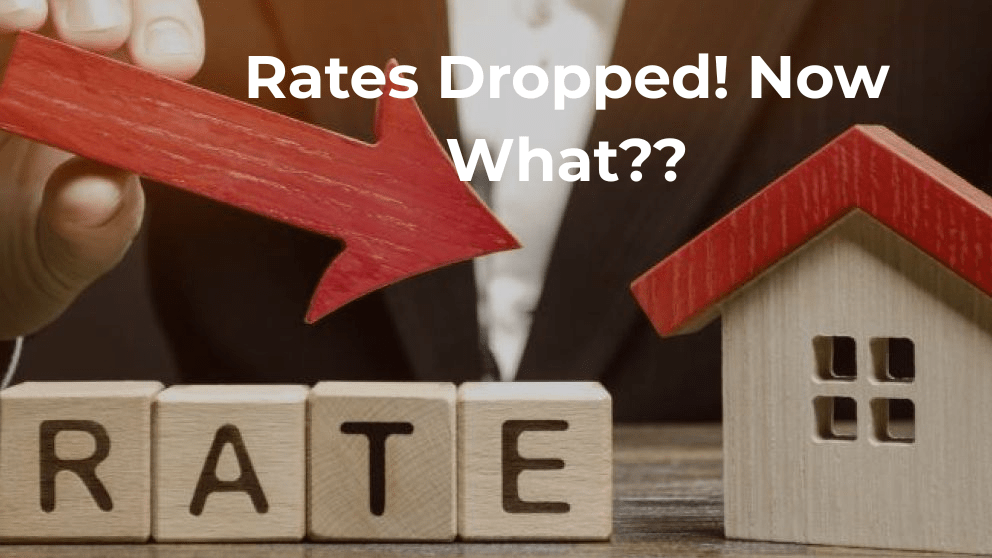
Interest Rates Dropped: Here’s What That Mean for Northwest Arkansas Real Estate

The Fed just announced a rate cut, and suddenly, the housing market chatter is louder than Razorback fans after Sam Pittman’s unceremonious canning. Buyers are asking if nowโ€™s the time to pounce, recent homeowners are calling about refinancing, and everyone wants to know if another cut is on the way. Letโ€™s break it down in plain Englishโ€”without the economic jargon or the need for a finance degree.

What the Interest Rate Drop Means for Buyers in Northwest Arkansas

Lower Rates = More Buying Power

When interest rates dip, your monthly payment shrinks. That house in Bentonville or Rogers that felt like a financial stretch last month? Now it might actually fit your budget without causing heart palpitations. Lower rates donโ€™t mean homes are on sale, but they do mean you can get more house for the same payment.

Translation: if you were on the fence, this rate cut is like a polite nudge from the housing gods saying, โ€œHey, maybe get off Zillow at midnight and actually go look at a house.โ€

How Much More Home Can You Afford in 2025?

A small percentage drop in rates can mean tens of thousands more in buying power. For example, a $300,000 home at last yearโ€™s rate might cost you the same each month as a $325,000 home today. That bump could mean the difference between a standard kitchen and the one with the quartz countertops youโ€™ve been drooling over.

Why Itโ€™s Still Smart to Focus on Your Budget (Not Just Rates)

That said, donโ€™t let โ€œlower ratesโ€ convince you to throw your budget out the window. The right home is about fit, not just what the bank says you can technically afford. Rates help, but a house still needs to fit your lifestyle (and your grocery bill).


Should Recent Homebuyers in NWA Refinance After the Rate Cut?

Why Lenders Already Anticipated the Cut

The second the Fed sneezes, lenders have already stocked up on tissues. In other words, they usually see rate cuts coming and price them into the mortgages you locked in. That means most people who closed recently already got the benefit baked in.

When Refinancing Actually Makes Sense

Refinancing can be smart if rates drop significantly from where you locked, or if youโ€™re planning to stay in your home long enough to recoup the closing costs. But if your rate is already competitive, chasing a tiny drop wonโ€™t save enough to justify the hassle.

The Cost of Refinancing vs. the Potential Savings

Think of refinancing like switching cell phone plans. Sure, you might save $10 a month, but if it costs $3,000 in fees and paperwork to get there, is it really worth it? Unless you see a major rate shift, the answer is probably no.


Is Another Interest Rate Cut Coming in 2025?

What Economists Are Predicting

Some experts believe another cut is possible later this year if the economy cooperates. But just like trying to predict Arkansas weatherโ€”sunny morning, tornado afternoon, snow by dinnerโ€”itโ€™s not an exact science.

Why Timing the Market Rarely Works

Waiting for the โ€œperfectโ€ rate is like waiting for the perfect time to have kids, start a business, or clean out the garage. It never really arrives. If buying now makes sense for your budget and your life, donโ€™t stall just because youโ€™re hoping for another quarter-point drop.

The Best Approach for Buyers and Homeowners in Northwest Arkansas

The real key is flexibility. The Fed could cut again if the economy plays nice, but for now, donโ€™t plan your whole financial future around it. If youโ€™re ready to buy, the best time is when it makes sense for your budget, not when youโ€™ve memorized Jerome Powellโ€™s facial expressions on CNBC.


Bottom Line for the NWA Housing Market

What Buyers Should Do Now

If youโ€™ve been house-hunting in Fayetteville, Bentonville, or Bella Vista, this is a great window to make your move. Youโ€™ll get more bang for your buck thanks to lower rates, but donโ€™t let excitement push you past your comfort zone.

Why Homeowners Can Relax (For Now)

If you bought recently, congratulations, awesome! You likely already have a solid rate. Unless we see another big drop, refinancing probably isnโ€™t worth the time, cost, and paperwork. Translation: Enjoy your new home without refinancing FOMO.

Stay Flexible, Stay Informed, and Stay Local

Could rates drop again in 2025? Sure. But donโ€™t build your whole housing strategy on a โ€œmaybe.โ€ The smarter move is to focus on what works for your family and your budget now. The market will do what the market does. Your job is to make sure your real estate decisions fit your life here in Northwest Arkansas.


Ready to talk through your options? Whether youโ€™re buying your first home, upgrading, or just curious about refinancing, Iโ€™ll help you translate โ€œFed speakโ€ into real-world advice (with fewer acronyms and more coffee).

I Flip (and Build) Houses for a Living, But Apparently Canโ€™t Be Trusted with One of My Own

Can I just vent for a second? I’ve had three cups of coffee and can hear colors arguing over whose hue is superior. I’ve got to get this rant out before I have a caffeine-induced stroke.

Our family has been self-employed since 1999. We’ve specialized in real estate investing since 2006. That’s a long time. It’s been fabulous and freeing and all the things one can imagine…until the Hubs and I go to buy a house for, God forbid, ourselves!!

My husband can analyze cash flows, estimate ARVs, and negotiate offers like he’s in an HGTV showdown. We can build houses from the ground up, navigate the pitfalls of city permitting, and even help others build wealth through real estateโ€”but mention that we want to buy a home for our own family, and suddenly, we become a financial wild card.

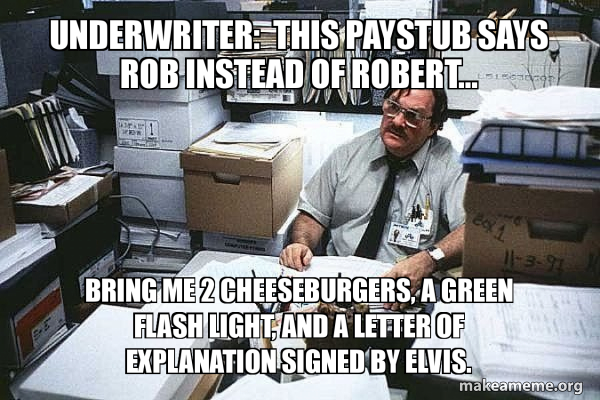
โ€œSelf-employed, you say?โ€ the mortgage underwriter raises an eyebrow. โ€œWeโ€™re going to need two years of tax returns, bank statements, letters of explanation, a signed affidavit from your third-grade math teacher, and maybe your blood type. Just to be safe.โ€

Meanwhile, our W-2 friends are getting preapproved faster than I can say โ€œdebt-to-income ratio,โ€ all because they have a magical thing called a pay stub. Apparently, that tiny slip of paper holds more power than our 60-personal financial statement showing eight flips, five rentals, three new builds, and the fact that we haven’t missed a payment since Blockbuster was still a thing.

But wait! There’s more! The dreaded โ€œwrite-off dilemma.โ€ As any savvy investor knows, the key to not giving Uncle Sam half your soul is writing off everything legally possible. That cup of coffee during a contractor meeting? Write-off. The paint samples from Loweโ€™s? Write-off. The conference you attended in Vegas? Okayโ€ฆ maybe half of that.

But here’s the catchโ€”those write-offs shrink your taxable income, and guess what the bank uses to qualify you for a mortgage? Thatโ€™s right. Your taxable income. According to our tax returns, we make about $37.52 a year.

And then there are those glorious years when your tax return shows a juicy profitโ€”enough to make your mortgage lender do a little happy dance in their ergonomic desk chair. But just as they’re about to approve you, they flip to last year’s return… and there it is: that big, beautiful loss. Suddenly, the mood shifts. You go from โ€œpromising borrowerโ€ to โ€œriskier than a fixer-upper with a foundation issue.โ€ Because if thereโ€™s one thing real estate is known for, itโ€™s feast or famineโ€”and mortgage lenders want to see two solid years of you feasting, not surviving on ramen and sheer willpower.

So now we’re sitting across from a loan officer, explaining that, yes, while we technically some years look like we “made nothing,โ€ we actually always do make something. A lot of somethings. And I swear we can pay the mortgage. But unless I can time-travel and amend two years of tax returns, we’re out of luck.

You know what the real kicker is? After all the scrutiny, the lender graciously steers us toward their in-house loanโ€”complete with a higher interest rate. Because nothing says “we trust your financial savvy” like penalizing you for excellent credit and nearly two decades of surviving the wild rollercoaster that is the real estate market. Meanwhile, someone flipping burgers at McDonald’s (no shade!) might qualify for a conventional loan with a lower rate, despite earning less and possibly quitting next Tuesday. But us? The seasoned investors? Try getting a personal mortgage and suddenly weโ€™re treated like a financial liability armed with a Pinterest board and a dream.

In conclusion: real estate investing is glamorousโ€”until you try to buy a house for yourself. Then you realize the system was built for people with jobs that come with watercoolers, not tool belts and spreadsheets.

But thatโ€™s okay. Because we self-employed real estate folks are used to creative solutions. If we can turn a condemned properties into a cash-flowing beauties, surely we can find a lender who understands the hustle.

Or at least one who doesnโ€™t flinch when we say, โ€œwe’re self-employed.โ€

Tariffs, Taxes, and Why Real Estate Still Winsโ€”Oh My!

Truth bomb: Real Estate Investing Still Makes Senseโ€”Even in an Uncertain Economy

Letโ€™s be honest: The economy feels a little shaky right now. Inflation, interest rate hikes, stock market swings, conversation about tariffs that frankly no one understandsโ€”itโ€™s no wonder many investors are second-guessing their moves. But despite the noise, one investment strategy continues to prove its worth: real estate.

Hereโ€™s why real estate remains a smart, stable optionโ€”even when the economy feels anything but.

1. People Always Need Housing (Because Cardboard Boxes Arenโ€™t Zoned Residential)

No matter whatโ€™s happening in the economyโ€”boom, bust, or somewhere in betweenโ€”one thing remains true: People need a place to live. You can skip the avocado toast, cancel your streaming subscriptions, and delay upgrading your phone… but โ€œjust not living anywhereโ€ isnโ€™t really an option.

Sure, some folks dream of going off-grid in a van, but most still prefer a roof that doesnโ€™t leak and walls that donโ€™t flap in the wind. Thatโ€™s why real estate has staying powerโ€”it meets a basic human need. Shelter isnโ€™t trendy. Itโ€™s timeless.

So while markets may wobble and stocks may spiral, housing demand? Thatโ€™s not going anywhere. Unless humans suddenly stop needing to live indoorsโ€”which feels unlikely.

2. Cash Flow Can Be a Lifesaver (Especially When Your Other Investments Are on Life Support)

You know that warm, fuzzy feeling when rent hits your account right on time? Thatโ€™s cash flowโ€”and in a shaky economy, itโ€™s basically the financial version of comfort food. Reliable, satisfying, and way less salty than your stock portfolio.

While your crypto wallet is having an existential crisis and your retirement account is taking a nap, that monthly rental income shows up like, โ€œHey bestie, I got you.โ€

Itโ€™s not just about making moneyโ€”itโ€™s about keeping your sanity while the rest of your assets do their best rollercoaster impressions. When the markets are wild, cash flow is your emotional support income.

3. Inflation Actually Works for You (For Once, Something in This Economy Does)

Usually, inflation feels like that annoying friend who eats your fries, borrows your hoodie, and never pays you back. But when you own real estate? Suddenly, inflation becomes that unexpected sidekick who actually helps out.

Hereโ€™s the deal: as prices go up, so do rents and property values. So, while everyone else is panicking over the cost of eggs and wondering if they should start a backyard chicken farm, youโ€™re just over here watching your rental income rise with the tide.

Itโ€™s like inflation finally decided to stop being the villain and join your team. And honestly? Weโ€™ll take the win.

4. Real Estate Is a Tangible Asset (You Canโ€™t Live in a Stock Certificate)

Letโ€™s be realโ€”owning stocks is great until the market crashes and all youโ€™re left with is a pie chart and an existential crisis. But real estate? Itโ€™s there. You can touch it, walk through it, paint the walls neon green if you really want to (though maybeโ€ฆ donโ€™t).

You canโ€™t crash on the couch of your mutual fund. You canโ€™t Airbnb your NFT. But you can buy a property and turn it into income, equity, or your own personal HGTV project.

Itโ€™s an investment you can actually stand inโ€”preferably on solid hardwood floors.

5. Opportunities Are Everywhere Right Now (If Youโ€™re Not Afraid to Poke Around a Little)

Sure, interest rates are higher and the news makes it sound like the financial apocalypse is upon usโ€”but guess what? Thatโ€™s exactly when some of the best deals sneak onto the market, quietly whispering, โ€œHey… you up?โ€

When everyone else is running for the hills (or just binge-watching Zillow listings without actually buying), savvy investors are out there scooping up underpriced gems, negotiating like champs, and getting the pick of the litter. Itโ€™s like Black Friday for real estateโ€”except with fewer stampedes and more closing costs.

The market isnโ€™t deadโ€”itโ€™s just quieter. And in that calm? Opportunities are doing cartwheels, waiting for someone to notice.

6. Tax Benefits Help Maximize Returns (A Rare Chance to High-Five the IRS)

Real estate is one of the few places where the tax code actually feels like itโ€™s rooting for you. Depreciation, mortgage interest deductions, 1031 exchangesโ€”itโ€™s like a secret menu of financial perks.

And letโ€™s be honest: finding out you owe less in taxes because you own property is the adult equivalent of finding money in last winterโ€™s coat pocket… times ten.

Itโ€™s one of the only times you might feel tempted to whisper, โ€œThanks, Uncle Sam,โ€ and actually mean it. (But donโ€™t get too excitedโ€”heโ€™s still charging you for that latte and a half you bought last year.)

7. Youโ€™re in Control (Finallyโ€”Something in Your Life You Can Actually Manage)

Letโ€™s face it: you canโ€™t control the stock market, gas prices, or how your neighbor insists on mowing his lawn at 6 a.m. on Saturdays. But real estate? Thatโ€™s where you get to play boss.

You decide which property to buy, what rent to charge, whether to renovate the kitchen or just slap on a fresh coat of paint and call it โ€œvintage charm.โ€ Want to Airbnb it? Long-term tenant? Paint a mural of a cat playing a saxophone on the side? Hey, itโ€™s your kingdom.

In a world full of uncertainty, investing in real estate is like saying, โ€œYou know what? I will be the main character today.โ€ And your property? Thatโ€™s your stage.


Final Thoughts:

Letโ€™s be realโ€”real estate isnโ€™t always glamorous. There will be leaky faucets, weird smells, and the occasional tenant who thinks โ€œrent due on the 1stโ€ is just a loose suggestion. But despite the quirks, real estate remains one of the few investments where you can build wealth while literally sitting on your assets.

In a world where the economy feels like itโ€™s being run by a magic 8-ball, real estate gives you something solid. Something that pays you back. Something you can point to and say, โ€œThatโ€™s mine, and itโ€™s making me moneyโ€”even while I sleep (or doomscroll Zillow).โ€

So, while others panic about interest rates and refresh their stock apps like itโ€™s a game of financial roulette, you? Youโ€™re playing the long gameโ€”with cash flow, appreciation, and some sweet tax perks in your corner.

Because at the end of the day, bricks and mortar beat bricks of goldโ€ฆ especially when someone else is paying the mortgage.

“Coffee, Whiskey, and the Truth About Real Estate: Why NWA’s Market Is Heating Up in 2025”

I need another cup of coffee before I dive into this.

 Or a glass of whiskey. 

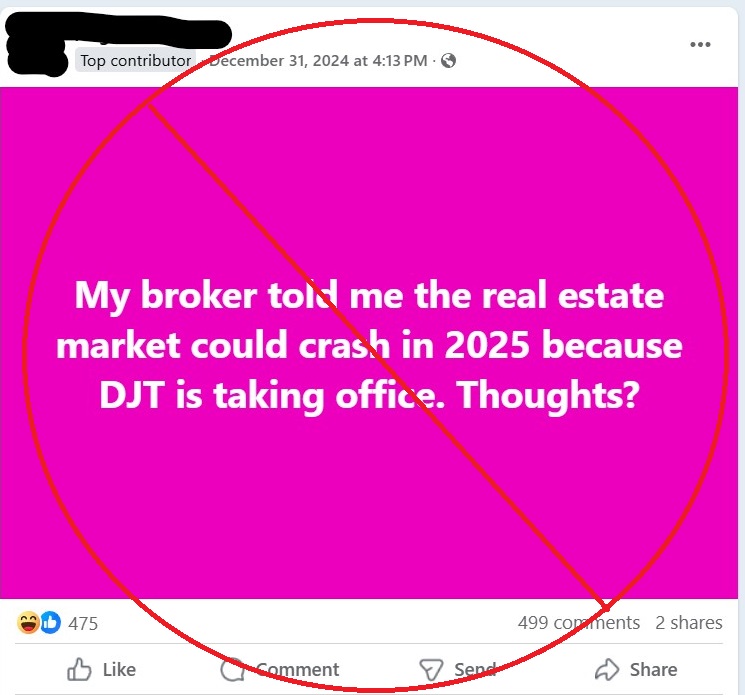
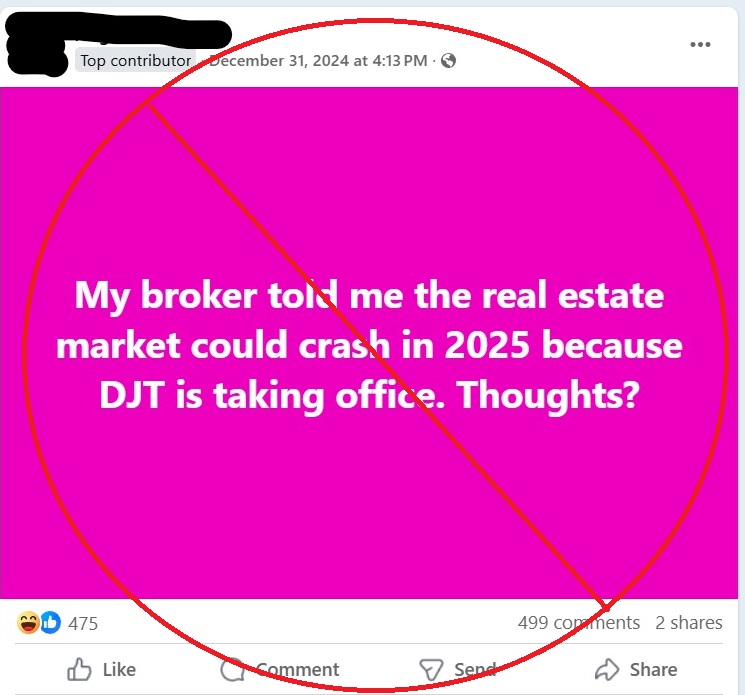
I see posts like this all the time. While theyโ€™re most likely meant to grab reactions, they’re a demonstration of ignorance at best.ย 

I know every real estate market is different. Iโ€™ve got my finger on the pulse of both the Austin market and here in Northwest Arkansas. I get it. However, the fact of the matter is that a president, whether Democrat or Republican, will not be able to come in and single-handedly โ€œcrashโ€ the real estate market. Wherever youโ€™re at.

Since NWA is my home, Iโ€™m going to give you four solid reasons I believe we will see housing prices continue to rise here and why this spring will indeed be a hot market. No matter who you voted for.

But first, letโ€™s talk about how stuff works. 

Yes, I know that a political administration’s policies will affect the market. But I also know how our economy works, as well as the Federal Reserve and their decision on what to do with interest rates, which is what really dictates what happens in all things real estate. 

A quick lesson in how the Fed determines what to do with the interest rate. 

The Federal Reserve does not make arbitrary decisions based on the last election cycle. Decisions regarding whether to lower the interest rate are based on multiple fronts.

  • Inflation: Target inflation rate is 2%. If inflation remains below this rate, this is an indicator rates could drop. Today’s current rate is 2.7%, which is a huge improvement from June of 2022 where it was as high as 9.1%.
  • Employment and labor markets: Higher unemployment rates, slow job creation, and stagnant wages could trigger a rate cut.
  • Economic growth: Slower GDP growth and a drop in consumer spending could signal a cut.
  • Stock market trends: Sharp declines can influence the Fed’s decisions on rate cuts.
  • Global market trends: Global slowdowns can also predict what direction the Feds could take in regard to rate cuts.

โ€ฆjust to name a few. Even natural disasters can affect the decision to raise or lower the interest rates. 

And yes, I know certain policies will affect the market. But please. Stop the fatalism. The sky is not falling, no matter who the president is. 

Now, grab yourself a hot cup of coffee, and let’s go to my four reasons why I believe weโ€™ll see a boon in the NWA market.ย 

  1. Continued Economic Expansion. Everyone knows Bentonville is the home of Walmart. But did you know J.B. Hunt, Tyson Foods, and Simmons Food all call this area home and continue to attract a skilled workforce? Additionally,ย  Walmart’s newย  1 billion dollar “Home Office” campus, set to open in 2025, is expected to continue to boost local employment and housing demand.
  2. Population Growth: Letโ€™s talk people. Bentonvilleโ€™s population rose by 2.7% in 2023, and itโ€™s not slowing down. This indicates a sustained demand for housing.
  3. ย Limited Housing Inventory: While thereโ€™s lots of new construction happening here, housing inventory is still low. This means increased competition for buyers and higher prices. According to the Skyline Report, in the first half of 2024, 4,799 homes were sold in Benton County and nearby areas, marking an 8.5% increase from the previous year, with 39.5% being new constructions.
  4. Stable Mortgage Rates: Finally, future projections indicate that mortgage rates may decline slightly this year, encouraging even more buyers to enter the market and increase housing demand.

Do I have a crystal ball? No. Sure wish I did sometimes, but I donโ€™t need one to determine whether or not the market is going to crash this year. All facts point to a growing real estate economy in 2025.

Similar to my waistline from the holidays. But I digress.

So, to my real estate colleagues, stop worrying, get out there, and sell some houses.